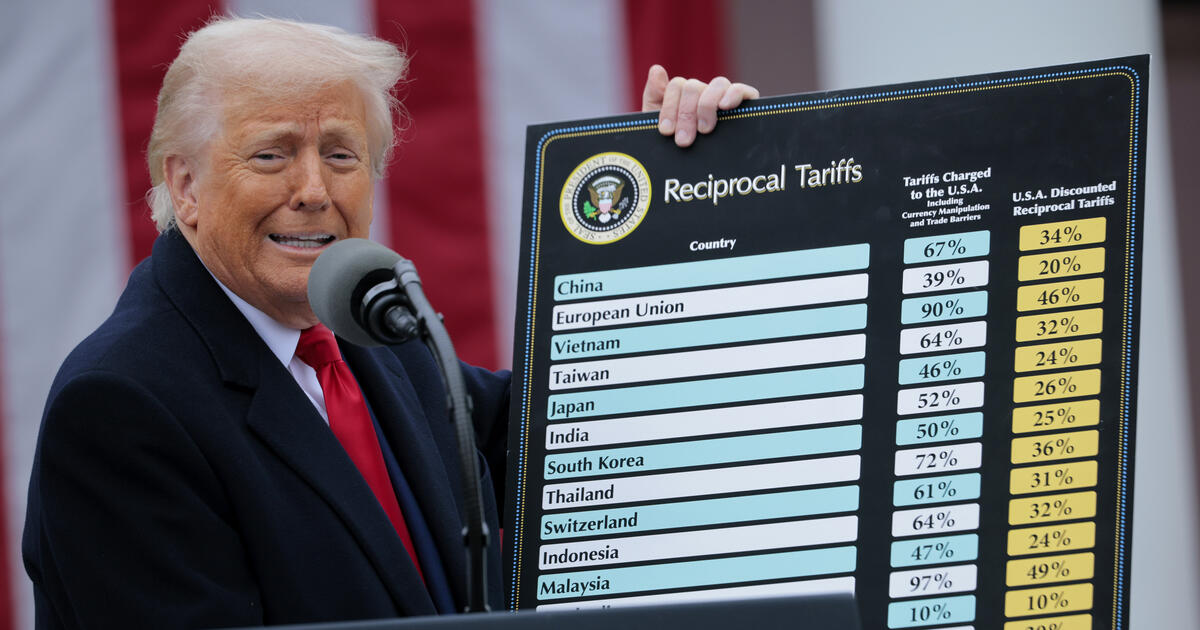
Trump has described the tariffs as “reciprocal” and necessary to address US national and economic security interests. China has promised to impose counter measures while European Commission president Ursula von der Leyen said the EU is prepared to do so too, should it fail to negotiate the removal of “remaining barriers to Transatlantic trade” with the US administration. UK prime minister Sir Keir Starmer said the UK government will pursue a trade deal with the US but that it has “a range of levers” it can pull if it cannot strike an agreement that is in the UK national interest.
Kotsonis said: “You will struggle to find a trade expert that would assert that these so-called retaliatory tariffs are in any way compliant with WTO rules or that they will lead to the generation of $6 billion in investment, as the US administration has claimed.”
“What the hike in tariffs is more likely to do is to increase the cost of living, lead to greater inflation and depress the world economy. None of this is good for businesses wherever they may be based,” he said.
“Businesses in the US will find that their manufacturing costs will rise as a result of inflationary pressures, whilst businesses which export their products to the US might find that the hike in tariffs will lead to diminishing demand and depressed sales. The impact of these issues on businesses will be even greater as a result of retaliatory measures by the rest of the world, not least China and the EU, all big markets for US products,” Kotsonis added.
Kotsonis, who is also a European Commission approved arbitrator for bilateral trade disputes under EU trade agreements, said that Harley-Davidson motorcycles and bourbon whiskey are among the US "politically sensitive" exports that could be targeted for EU tariffs under the package of countermeasures that the European Commission is considering. He said the Commission could also use its so-called Anti-Coercion Instrument for the first time to “impose additional measures that will make it more difficult for US businesses, including US tech companies, to trade in the EU”.
“Such measures might include intellectual property restrictions and barring US companies from bidding for contracts in the EU public procurement markets,” he said, though he expects the EU will take a staged approach to retaliation should EU-US negotiations not progress as the EU would like.
Kotsonis said that while UK exports will face a lower tariff than exports to the US from many other countries, many UK-based multinational businesses will feel the effects of higher tariffs imposed elsewhere where they have manufacturing bases in those countries.
“In a world where the manufacturing of goods involves components crossing multiple borders multiple times, most businesses will feel the impact of the Trump administration's retaliatory tariffs one way or another,” Kotsonis said.
“A possible but an unintended consequence of the Trump administration's retaliatory tariffs would be a fundamental shift in trade flows, with businesses seeking to find new markets away from the US, and with affected countries much more incentivised to do trade deals between them. For example, the Trump retaliatory tariffs might have created an even greater incentive for the likes of the UK and the EU to conclude their respective negotiations with India, an increasingly important trading partner which itself is badly affected by the Trump administration’s tariff hike,” he said.