International arbitration expert Jason Hambury of Pinsent Masons said: “This is the first arbitration survey by QMUL for the energy sector in nearly a decade and could not be more timely given current geopolitical events set against the background of the energy transition agenda.”
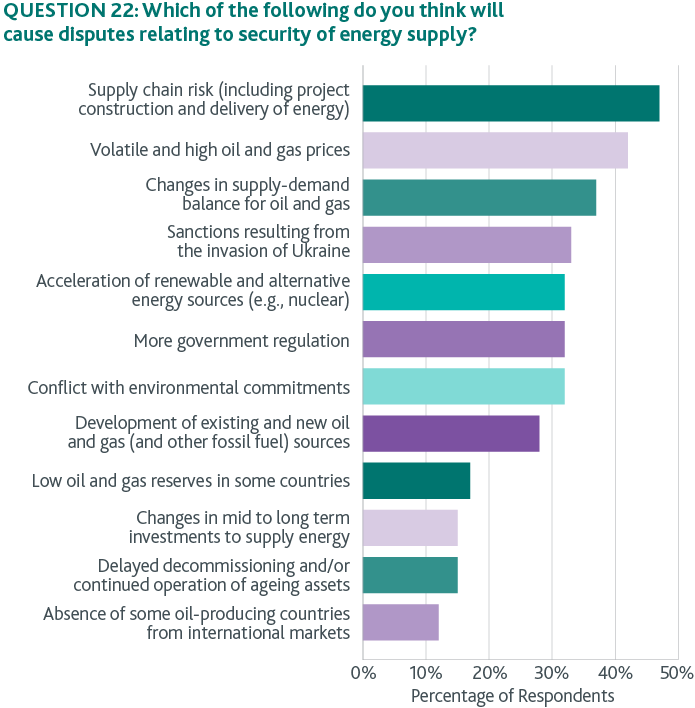
“The survey reveals that the impact of the Russia-Ukraine conflict will continue to affect the sector for years to come. It is expected to be the driver for an increase in energy disputes over the short to medium term, with price volatility, security of energy supply, energy transition, sanctions and supply chain risk all being major causes of disputes. These will largely be resolved by arbitration, which end users still see as being the most effective forum for their resolution, albeit that improvements in how these arbitrations are conducted would be desirable,” he said.
Professor Loukas Mistelis of Queen Mary, who led the study, said: “For both the energy and the international arbitration communities it is critical to have the insights of key stakeholders in respect of whether arbitration continues to be fit for purpose and what is the impact of recent developments – from energy transition and climate change to the war in Ukraine and sanctions against Russia. The survey covers all the issues via quantitative and qualitative methods.”
Among the issues that the study explored were what the principal causes and types of energy disputes have been, and what they are expected to be in the near to medium term.
While the main cause of disputes in the past five years were issues arising from the construction of energy assets and the provision of equipment – including supply chain issues and raw material shortages – price volatility of raw materials and energy is predicted to overtake it as the primary cause of disputes over the next five years. The greatest increase in energy-related disputes is expected to arise in Europe.
“It is apparent that the main issues now facing the sector are the fluctuating cost of the necessary raw material inputs to develop, operate, and maintain energy projects and the energy unit prices which the projects are able to attain once complete,” according to the report.
Unsurprisingly, the study found that the transition to cleaner sources of energy is at the forefront of the industry agenda. Respondents to the survey believe disputes associated with the energy transition will increase in the next five years, with factors such as the adoption of new technology, the emphasis on delivering projects quickly to satisfy government incentive schemes, and pressure to comply with changing regulations among those cited as likely causes of dispute.
However, respondents believe the main impact of the energy transition on disputes will not be seen until nearer 2030 – or perhaps even beyond that date if energy security issues arising in the wake of Russia’s war in Ukraine leads to delay to the global energy transition.

.png?la=en-gb&rev=c996a0aefceb4cb4abc6d71f4b39af34&hash=25E164D86F6ECD2ED1938FB4C6A6A695)