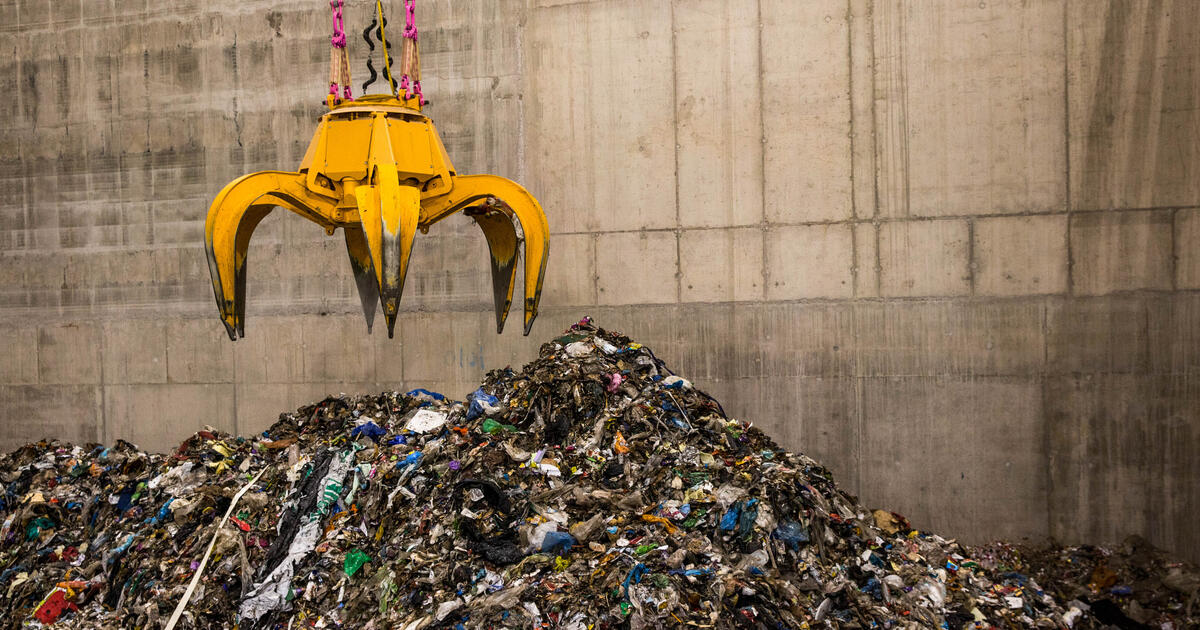
The reforms, set out under Presidential Regulation No. 109 of 2025, replace the 2018 system and are designed to improve commercial certainty, strengthen government coordination and attract sustained private sector investment into WtE infrastructure.
There are, however, risks for developers that must be addressed to ensure that the reforms are successful in ensuring the ongoing viability of Indonesia’s WtE industry.
The new model introduces clearer institutional roles, a unified national tariff, a strengthened project planning process and a more transparent investor selection mechanism. It also confirms Danantara, the state investment holding body, as a central actor in the delivery of WtE projects nationwide. Collectively, these changes are aimed at resolving the bottlenecks that stalled earlier WtE initiatives and accelerating project implementation as Indonesia pursues its net zero emissions target for 2060 or earlier.
WtE has now been designated a national development priority. The government has identified ten initial locations for implementation, several of which, including Greater Bogor, Bekasi City, Denpasar and Yogyakarta, have already commenced the first stage of tendering. These tenders, launched in late 2025 and early 2026, demonstrate the government’s determination not only to reform the regulatory framework but to push projects rapidly through procurement.
The list of prequalified sponsors includes major global companies from Japan, China, Europe and Singapore. Their participation signals strong international confidence in the revised regime and reflects growing interest in Indonesia’s urban infrastructure opportunities. It also underscores the significance of the shift from a fragmented, municipally driven model to a coordinated, central government-aligned structure that provides greater predictability for investors and lenders.
New cooperation mechanism and tariff regime
A key change under Regulation 109/2025 is the introduction of a cooperation mechanism that better aligns the interests of the public and private stakeholders involved in WtE projects. Local governments remain responsible for waste provision, PLN continues as the electricity off taker, and private developers build and operate facilities, while Danantara bridges the gap between the three.
One of the most consequential reforms is the adoption of a single, nationally applicable electricity tariff of US$0.20/kilowatt per hour (kWh), applied on a flat basis for the entire duration of the power purchasing agreement (PPA). Under the previous framework, revenue was split between the electricity tariff and a locally determined “tipping fee”. Because many municipalities lacked the fiscal capacity to reliably pay tipping fees, investors viewed these revenue streams as uncertain, and several proposed projects failed to reach financial close. The new tariff eliminates this dependency on local budgets and ensures that WtE projects primarily rely on predictable electricity revenue.
The regulation also addresses market questions about whether WtE projects can continue to be implemented through a public-private partnership (PPP) scheme. The answer is yes, however, projects implemented via PPP or other mechanisms that do not meet the designated WtE criteria will not benefit from the fixed national tariff. This distinction is designed to ensure that tariff support is reserved for projects that align with the government’s strategic WtE model.
To be designated for WtE development, regions must meet criteria related to waste-supply capacity, land readiness, budget availability and regulatory preparation. Additional incentives further support bankability, including VAT exemptions for domestic technology and compensation mechanisms for PLN when it is required to purchase electricity generated from WtE facilities.
Strengthened planning and project selection process
The regulation embeds a more rigorous planning process than existed under the previous regime. Local governments must now demonstrate clear evidence of waste overcapacity, land readiness and budget availability before a project site can be designated. Once designated, Danantara takes responsibility for coordinating the preparation of feasibility studies and leading the selection of the WtE project company, which takes the form of a special purpose vehicle (SPV).
The SPV selection process is open to qualified candidates with proven technological, financial and project delivery capabilities. Once selected, the SPV must enter into two primary agreements:
- a cooperation agreement, signed with the local government, which governs the supply of waste in agreed quantities and quality, land provision and access to supporting infrastructure such as roads and raw water;
- a PPA, signed with PLN, which governs electricity sales, dispatch instructions, integration into the national grid, performance obligations and payment mechanisms.
To avoid inconsistencies between the two contracts, the cooperation agreement now mirrors the PPA’s 30 year duration from the commercial operation date (COD). Local governments must supply the agreed waste quantity, and penalties apply if they fail to meet volume commitments. No penalties apply if the waste supplied does not meet quality specifications, reflecting the practical challenges associated with municipal waste streams.
Public and private obligations under the cooperation agreement
The new cooperation model distributes responsibilities across public and private stakeholders in a more structured manner.
The local government must provide land at no cost for the duration of the concession, ensure raw water availability either from natural sources or via the regional utility PDAM, designate a disposal site for fly ash and bottom ash (FABA), provide access roads and street lighting along those routes and supply the contracted quantity of waste.
The SPV must construct pretreatment facilities, build the weighbridge, process FABA in compliance with hazardous waste regulations, utilise existing wastewater treatment facilities where applicable and decommission the facility at the end of the concession term unless the local government elects to take it over.
Contractual clarity and risk allocation under the PPA
The PPA continues to adopt a build-own-operate model and contains several provisions designed to enhance investor certainty. It includes a fixed electricity tariff, a clear take and pay mechanism based on annual contracted energy, lender step-in rights, liquidated damages for construction delays and penalties for technical underperformance.
PLN’s obligations, including dispatch instructions, purchase requirements and treatment of excess electricity, are clearly defined. Electricity generated beyond contracted levels is purchased at 20% of the base tariff, enabling developers to size plants appropriately while discouraging speculative upside assumptions.
One concern for investors is the absence of tariff escalation over the 30-year PPA term. While predictability increases bankability, long-term inflation exposure remains a key commercial consideration.
There is also a noteworthy dynamic regarding land risk. Although the draft PPA places land-related risk on the project company, the cooperation agreement effectively transfers this risk back to the local government by making it responsible for providing land at no cost throughout the concession period.
The PSGA and Danantara’s equity role
A distinctive element of Indonesia’s WtE model is the introduction of a project support and guarantee agreement (PSGA). Under the PSGA, Danantara enters a partnership with a financially strong private sponsor and holds a significant minority share in the SPV.
The PSGA requires the sponsor to guarantee obligations under both the joint venture agreement and the operation and maintenance (O&M) agreement. Additional funding obligations are placed entirely on the private developer partner. Composition of the private sector partner is tightly controlled, reflecting the government’s aim of ensuring that only well-capitalised and committed sponsors remain in the project throughout its lifecycle.
Share disposal restrictions
Draft documentation issued by Danantara sets out a detailed share disposal framework. Disposal of shares generally requires approval from the other shareholders, although Danantara is permitted to dispose of its stake to affiliates without restriction.
The process includes a right of first offer (ROFO), requiring the disposing shareholder to provide notice at least 20 business days before disposal. Other shareholders may then submit binding offers to purchase all, not part, of the shares on terms that include price, financing sources and confirmation of legal enforceability. If no offer is accepted within the prescribed period, the disposing shareholder may sell to a third party within six months, provided the price and terms are no less favourable than the best ROFO offer. If no such transaction occurs, the ROFO process must be repeated.
This governance structure is intended to ensure ownership stability and protect long-term project viability.
Ongoing risks for developers
Despite the improvements in regulatory clarity and commercial structure, developers still face risks, including:
-
- permitting delays, land handover issues and social opposition, which could slow construction timelines;
- waste volume and waste quality risks which, although partially mitigated contractually, remain inherent due to the complexity of municipal solid waste management;
- PLN-related risks, including payment currency differences, unclear treatment of electricity loss risk, absence of deemed commissioning or deemed dispatch provisions and grid interconnection delays;
- local content obligations, which add compliance complexity; and
- tariff non-escalation, which could create long-term revenue-erosion risks in a high inflation environment.
However, the regulation introduces more detailed termination compensation mechanisms, aligned with other PLN projects, that support debt recovery and a reasonable return on investment. Where termination arises from local government default or political risk linked to waste supply or land provision, responsibility for compensation sits with the local government rather than PLN.
Regulation 109/2025 represents a major step toward establishing a sustainable and investable WtE sector in Indonesia. The government has shown strong political commitment by modernising the regulatory framework, reshaping institutional responsibilities and issuing early tenders in priority regions.
Its long-term success, however, will depend on further refinements to project documentation; the ability of local governments to consistently meet their obligations; and effective coordination among national agencies, local authorities, Danantara and PLN. Early engagement from developers, lenders and sponsors, coupled with transparent dialogue with Danantara, will be essential to improving bankability and ensuring Indonesia’s WtE ambitions can be realised.
Co-written by Jardin Bahar and Gadis Dewi of Jardin Legal.